
Kenna Schott Photography
Kenna's Website Editor
A click-to-edit editor whose every Publish teaches the AI her voice.
The story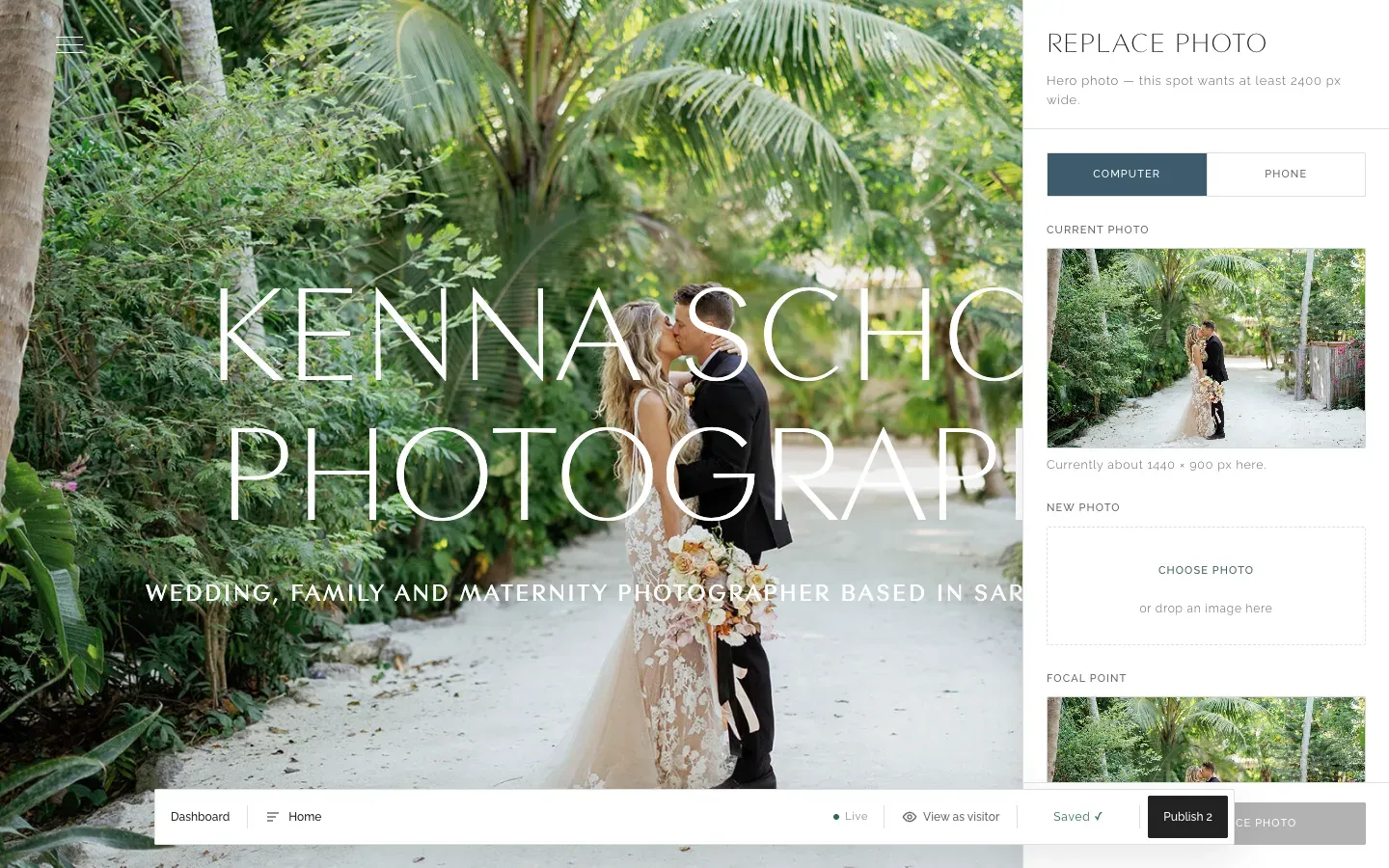
Live · Sep 2026 – Present
Latest from this projectProposal builder, overnightA custom click-to-edit editor for kennaschott.com. Kenna changes any word or photo on her Astro site and publishes it herself, without waiting on me. Every Publish is diffed and studied, and the lessons go into the voice guide the agents write from.
The problem
Kenna Schott is a wedding and family photographer. In August 2026 I rebuilt her site in Astro with coding agents, matching her old site builder page by page. Her first question about it: “but how am I supposed to edit it?”
For the next month the answer was me. Every photo swap and wording change went through me and an agent session. On the old builder she had done those herself. My brief for the editor: she makes updates when she wants, and it “won’t block me from my work or overwrite anyone’s work.”
What I built
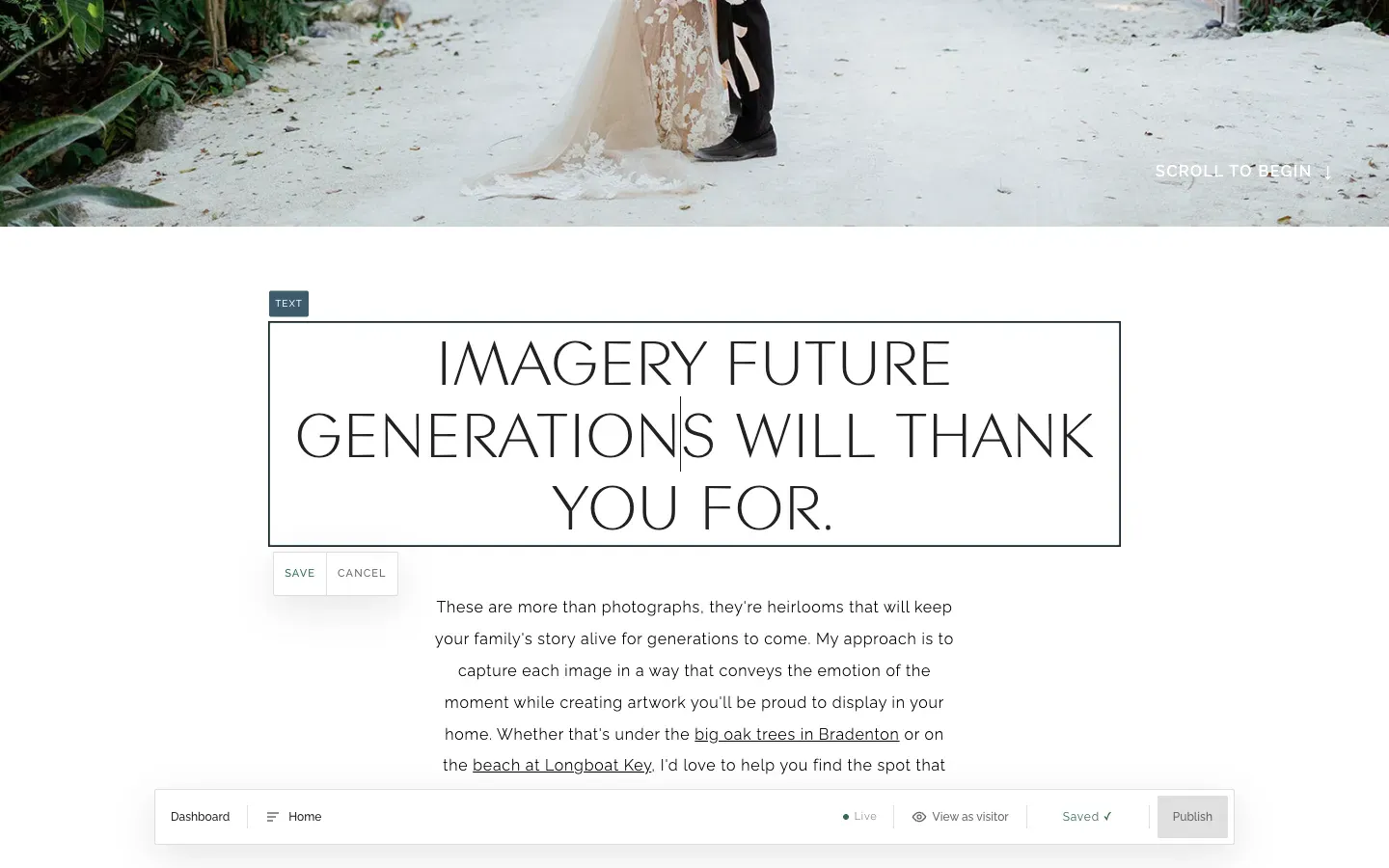
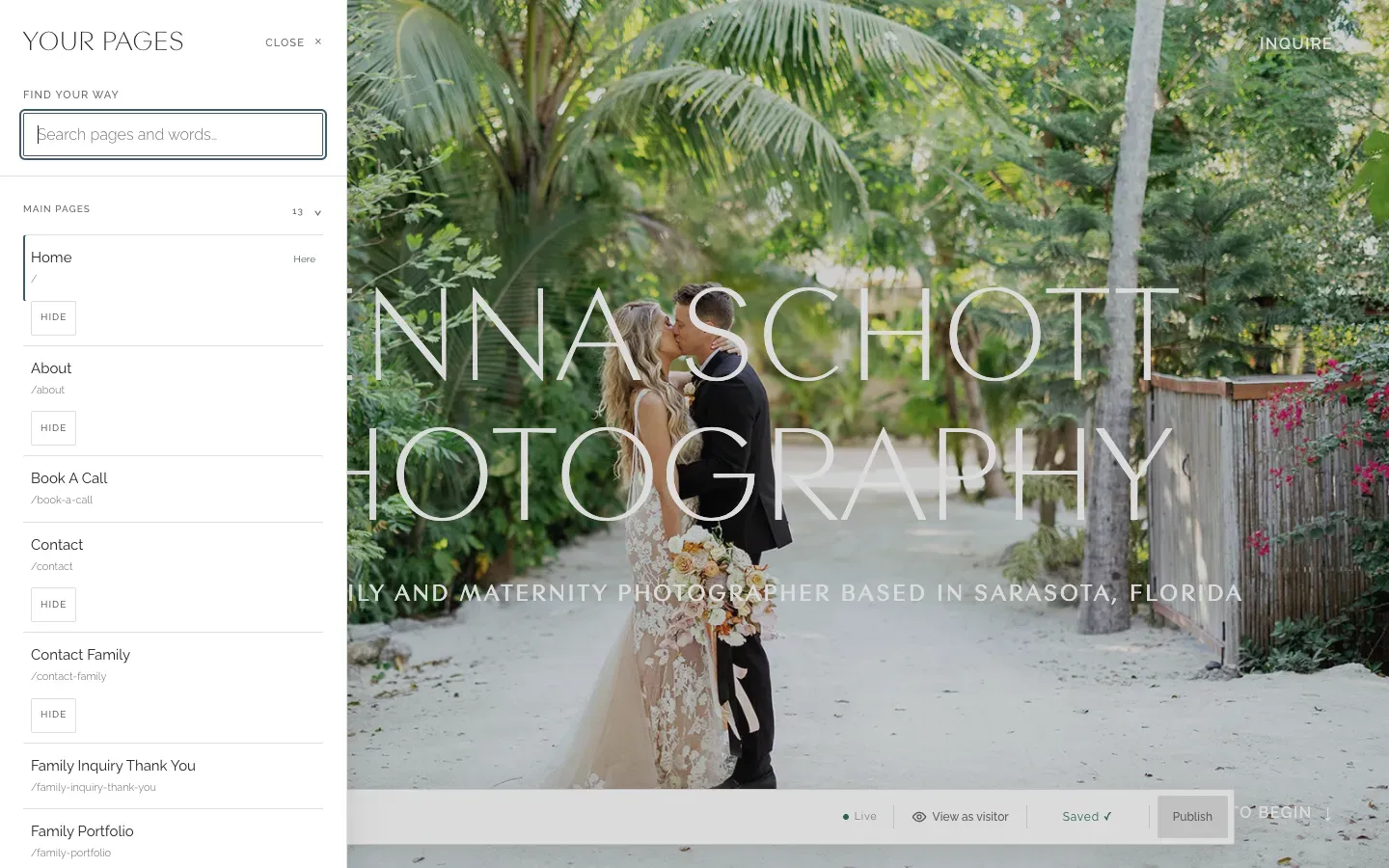
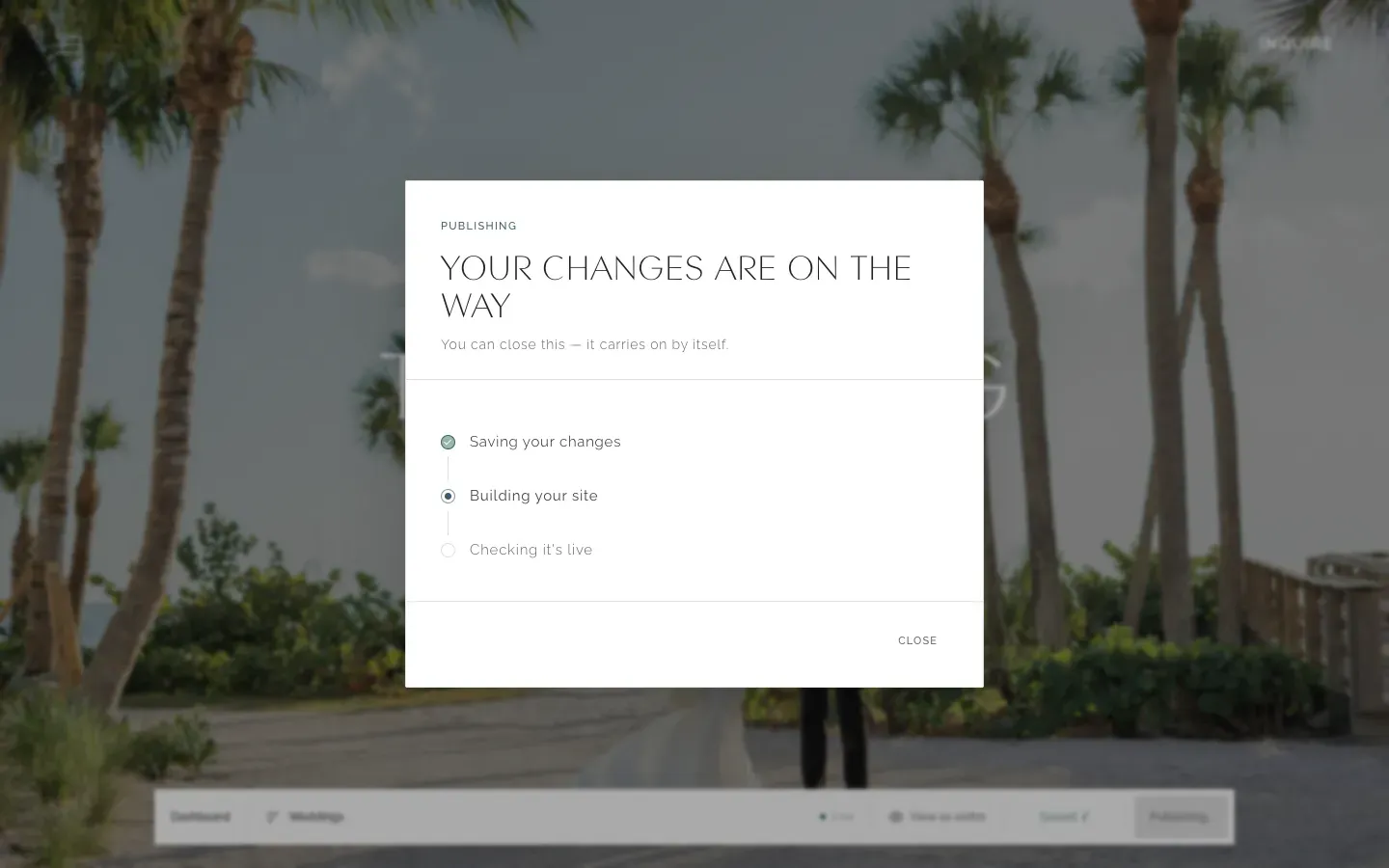
A click-to-edit layer over her real site. She signs in, opens a page, and every editable word or photo outlines on hover. Text edits in place. A photo opens a panel that states the width the slot needs, warns when a file is too small, asks for alt text and sets a focal point on full-width bands. Publish lists her changes in plain words, and about two minutes later confirms they’re live, checked against the live site itself.
Code and content are two git repos. Each save is a commit on the content repo’s draft branch, under her identity. Publish fast-forwards the published branch and CI rebuilds. My code releases and her Publishes never carry each other’s unfinished work. The live site stays static HTML; none of the editor’s code ships to it.
The part I care about most runs after she publishes. A script diffs every key she published against the previous publish or, for a first edit, against the draft that was live in code when she touched it. An agent session reads the report and writes dated rules into the voice guide that agents read before writing anything in her name. Her edits outrank the older guidance. Her first Publish changed 44 pieces of copy, and the lesson was “plain beats clever”: my agents’ “The light does half my job.” became “beautiful light is easy to find.” The next two Publishes changed 83 more. Their rule: a page title names the service and the place, nothing else.
In November the editor gained a proposal builder. She picks a starting point by sight, fills in a short form beside a live preview, swaps in photos from a library of 1,430 already on the site, and publishes an unlisted page for the couple.
How I built it with AI
Claude Code orchestrated. In September, Codex wrote the code, including about 95% of the content migration. Each unit was a closed spec: the files in play, the constraints and a “done when” line. Independent units ran in parallel. Claude judged each one by reading the diff and running it, never by reading Codex’s summary.
That rule caught real defects:
- CI cache. Codex’s first workflow restored the build cache before
npm ci, which wipes it. Every build would have started cold. - Overlay prototype. Claude clicked through it in Chrome and fixed ten misses. One was a CSS specificity bug that turned every filled button into bare text.
- Proposal builder. In November the units were Claude Code subagents with independent adversarial reviews. The reviews caught a new proposal writing its heading and add-on prices to keys every proposal shares. Publishing it would have changed all of them.
The proof is mechanical. compare-html shows that a refactor changed nothing a visitor can see. compare-styles compares the computed style of every element in real Chrome: 86 of 86 pages identical at 1440 and 400 px. Scripted suites run on throwaway branches. Click-throughs on the real editor use “ZZ” test proposals that get deleted afterwards.
The content loader, overlay, Save API and Publish all landed on September 18. The proposal builder shipped in two builds over one night. The second went out only after 245 checks passed and a production build matched the previous one file for file.
Where AI stayed out
Her copy is hers. Her first Publish left a heading over the wrong photo and promised a guide that didn’t exist yet. The agent flagged both and changed nothing; they waited for her. When wording has to change for business reasons, that’s my call, and the study marks those saves “not hers”, the same as the agents’ own test saves. Neither ever counts as her voice.
The diff is not a model. The study script is plain git plus the site’s data files loaded with the editor stubbed out. The “before” side is the literal draft that was live. A model only reads the finished report.
Releases stayed with me. Codex was never allowed to deploy or touch secrets. Claude shipped, and only on my go.
The product calls were ours. The build started with page titles locked behind an “Ask Ryan” note. She asked to edit every text box, so I unlocked all 52 locked fields. Titles that carry search terms now show a reminder instead. Prices stopped being one shared token; she writes the number into each sentence, the way she always had.
Where it is now
The editor is live and in use: 269 saves under her own sign-in in her first three days. One miss is worth naming. The editor’s API deploys by hand, and for about a day it ran stale code, so every attempt to put a page live was rejected while the toolbar only said “Not saved yet.” Now it shows the server’s reason, with Discard and Try again.
The January blog writer is retired. Its style guide was committed once and never changed. This one changes every time she publishes.
Still open: her first real proposal in the new builder, and a test on a real iPhone in Safari.
- 3,843editable text and photo fields across 86 pages
- 269saves under Kenna's own sign-in, Sept 21–23
- 245automated checks gating the proposal builder
A project, over time.
The milestones that shaped it, in order.
The predecessor: a blog writer
A Flask dashboard for keyword research, with posts drafted in Cursor against a style guide written once. It never learned from her edits and was retired.
"How am I supposed to edit it?"
Kenna's first question about the agent-rebuilt Astro site. I researched git-based CMSs and parked an editor UI. Until then, I was the editor.
Two repos and a prototype
A separate content repo with draft and published branches, and deploys moved to GitHub Actions. That night Codex built an overlay prototype and Claude fixed ten misses in Chrome.
The editor in a day
The content loader, overlay, Save API and Publish landed in one day. By evening the whole site was editable: 3,843 fields across 86 pages, with production proven unchanged.
First sit-down with Kenna
She rewrote most of a location page in about 90 minutes with me beside her. Her asks shipped that night: a link tool, photos that swap on the page at once, and no more locked titles.
First Publish, first study
Her first Publish reached the live site in under two minutes. The same day the edit-study routine began: 44 copy changes studied, and the first lesson was "plain beats clever."
83 more changes, and a toolbar overhaul
Two more Publishes brought 83 copy changes. A missed manual deploy of the editor's API had been rejecting every "Put live", so the toolbar now shows the server's reason, with Discard and Try again.
Proposal builder, overnight
Two builds in one night: a form with a live preview, a 1,430-photo library and per-proposal photo swaps. Build 2 shipped after 245 checks and a click-through in real Chrome.